
Whoa, check this out.
I dove into Solana’s transaction maze last week.
At first it felt like a swamp — lots of logs and hex.
My instinct said the tools would be clunky, but then things smoothed out.
Actually, wait — let me rephrase that: some explorers are slick, some are noisy, and somethin’ in between exists.
Seriously? this is getting interesting.
When you pull a transaction hash on Solana, you get a short, sharp truth: who moved what, when, and how many signatures were involved.
Medium-sized apps or wallets depend on that immediacy for user trust.
On one hand the raw data is there, though actually parsing it for human-friendly info can be maddening if the explorer hides token metadata behind nested calls.
Here’s the thing.
I like explorers that surface inner instructions fast.
They save you minutes or hours when debugging transfers or smart contract interactions.
Initially I thought any explorer with a pretty UI would do, but then I realized the real metric is RPC reliability and how quickly they index finality details — confirmations, block time, and inner instructions all matter.
Whoa, that surprised me.
Transactions on Solana aren’t just single-line items; they can include multiple token transfers, memo notes, and program invocations in one go.
If you glance casually you might miss an inner SPL transfer or an NFT mint that sits three instructions deep.
I’m biased, but I’ve relied on explorers that show decoded instructions inline — it cuts down mis-interpretation, especially during high-throughput periods.
Hmm… now a practical note.
If your app shows a “pending” state, don’t assume it’s hopelessly stuck.
Solana rounds through clusters and confirmations differently than some chains, and explorers that show “processed” versus “confirmed” status help a lot.
My gut said show both statuses, and then test under load — real users will thank you when they stop refreshing the page.
Really? yes, reliability matters.
An explorer is only as good as its back-end indexing and RPC layer.
During congestion, some explorers will lag behind, and transaction details appear delayed or incomplete.
That one time a popular marketplace experienced indexing lag, users saw NFTs vanish from listings until indexers caught up — ugly, but instructive.
Whoa, I remember that day.
NFT trackers must reconcile token metadata, on-chain mint logs, and off-chain JSON URIs, and that chain of dependencies is fragile.
When the metadata host flaps, the explorer should at least show the on-chain mint event and a fallback descriptor.
Oh, and by the way… caching strategies are everything here; aggressive caching can hide new mints, but conservative caching means bandwidth and cost, so it’s a tradeoff.
Here’s the thing.
If you care about forensic detail, pick an explorer that exposes signature lists, block heights, and fees per instruction.
Fees tell a story — whether a tx was prioritized, or whether a bot paid extra to jump the queue.
I’m not 100% sure of every fee nuance, but watching fee spikes during drops taught me a lot about market dynamics on Solana.
How I use explorers (and why you should care)
I check transactions to confirm swaps, to audit NFT mints, and to debug wallet issues.
When something looks off — like funds not arriving — I copy the signature and paste it into a reliable explorer to see raw logs, and that usually reveals the missing piece.
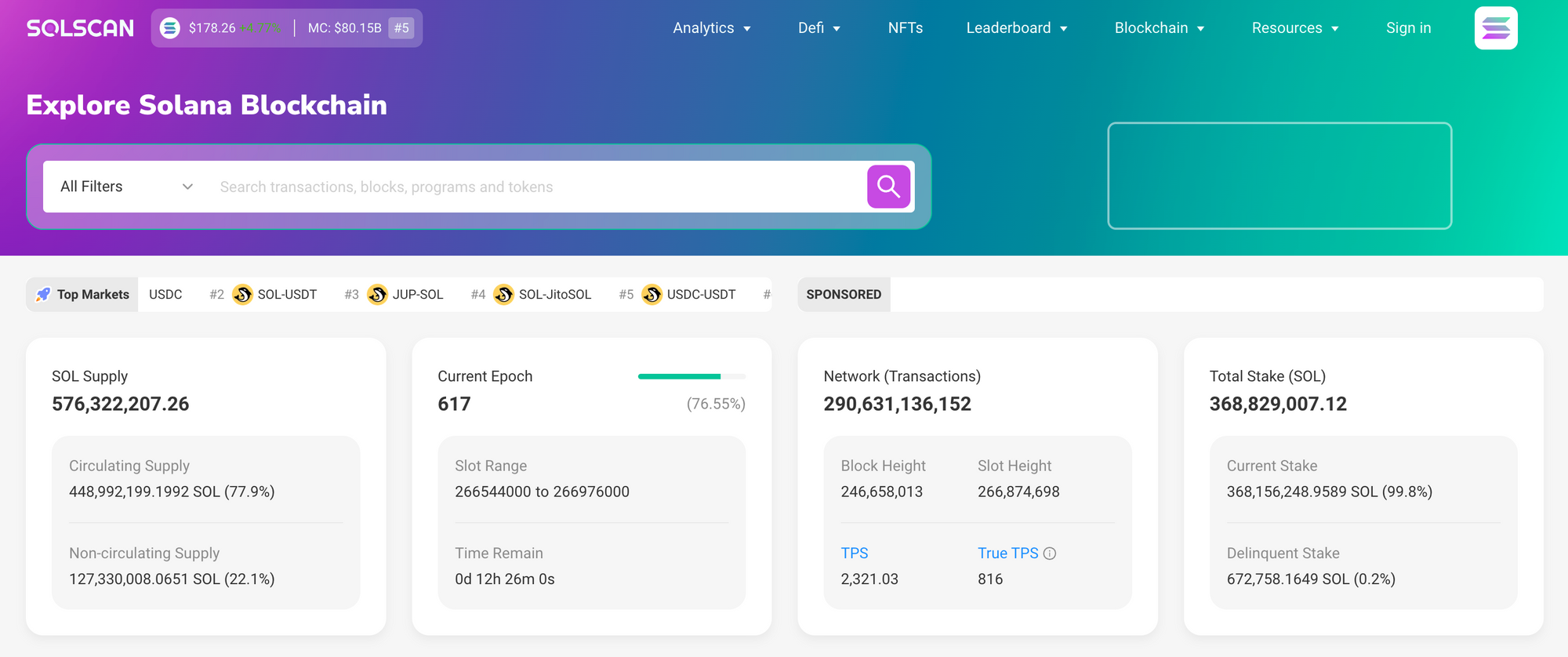
For a go-to interface, I often end up on solscan because it balances decoded instruction clarity with useful UX, though it’s not the only game in town and each tool has tradeoffs.
Whoa, quick tip.
Use the block time and slot info to estimate real-world lag.
Two slots might mean a second or less on a good cluster, but during spikes that timing warps and you need to look at confirmations.
My instinct said trust the explorer’s “finalized” label — and generally that’s safe, but I double-check when large sums are involved.
Seriously? there are several common mistakes.
Developers often rely solely on the memos field or assume a single instruction per transaction.
Marketplaces sometimes treat on-chain metadata as gospel when, in reality, the off-chain host can change or disappear.
So building UI that gracefully handles missing JSON, broken URIs, and fallback text will save you support tickets — very very important for customer experience.
Here’s the thing.
For NFT tracking, it’s helpful to follow both the mint transaction and subsequent token transfers, because ownership history matters.
Explorers that allow you to filter by token address and show transfer chains make provenance checks trivial.
I’m biased toward explorers that let me export CSV or view raw JSON, because when I dig deeper I like to script checks locally — messy but effective.
Hmm… a caveat and some ethics.
Public explorers let anyone read history, which is great for transparency, but remember privacy illusions; some users think “blockchain = anonymous” and that hurts later when their wallet history is exposed.
On the other hand explorers powers accountability for bad actors, which I appreciate — on one hand it helps security, though actually it also raises surveillance concerns depending on how easy it is to correlate addresses to real identities.
Whoa, last practical checklist.
If you’re choosing an explorer for yourself or integrating one into a product, look for fast indexing, good decoding of inner instructions, visible confirmation states, and robust NFT metadata fallbacks.
Also test during peak events — drop days are the acid test.
I’m not perfect; I still barrel into edge cases, but these practices have saved me hours of debugging and a few gray hairs.
FAQ
How do I find a transaction on Solana?
Copy the transaction signature and paste it into a blockchain explorer’s search.
Look for instruction decoding and confirmation status; if the explorer shows “finalized” you’re generally safe.
If you see multiple inner instructions, expand them to read token transfers and program calls.
Can explorers show NFT metadata reliably?
They can show what the chain records — mint events and token accounts — but off-chain metadata depends on external hosting.
Good explorers display on-chain pointers and provide fallbacks when JSON is missing.
If provenance matters, follow both on-chain events and archived metadata snapshots.
What if a transaction is stuck?
Check confirmations and slot time, then verify if conflicting transactions exist.
Sometimes resubmitting with higher fees or using a different RPC node helps, though be cautious and double-check signatures.
If unsure, ask a support channel and include the signature — transparency makes troubleshooting faster.